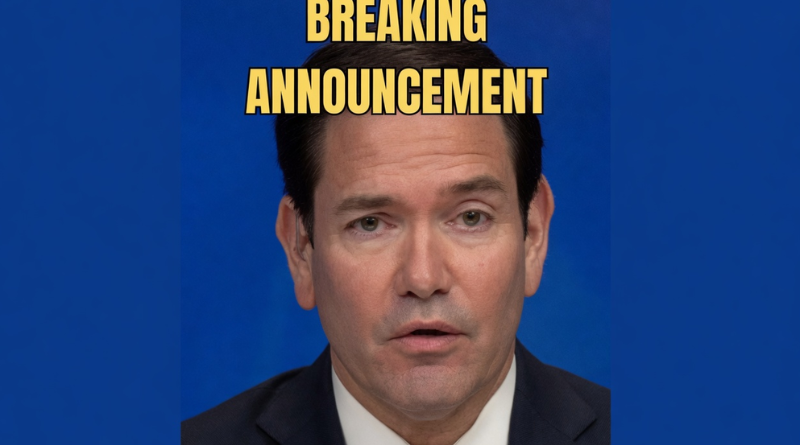
ecretary of State Marco Rubio said Friday that diplomatic back-channel efforts aimed at reducing tensions involving the United States, Israel, and Iran have shown what he described as “a little bit of movement,” though he cautioned that progress remains limited and fragile.
Rubio emphasized that while recent signals emerging from indirect communications are somewhat more encouraging, Washington is not interpreting them as a breakthrough. He stressed that the United States is maintaining a cautious stance and preparing for multiple scenarios depending on how the situation develops.
“I don’t want to exaggerate it, but there’s been a little bit of movement, and that’s good,” Rubio said, adding that he is “not popping champagne yet” and does not want to be “overly optimistic.”
Behind the scenes, diplomatic engagement has reportedly continued through third-party intermediaries seeking to keep communication channels open between Washington and Tehran. One of the figures repeatedly identified in regional security reporting as playing a facilitation role is Syed Asim Munir, who is expected to hold consultations with Iranian officials in Tehran as part of ongoing efforts to sustain dialogue.
Pakistan’s involvement reflects its broader effort to position itself as a stabilizing intermediary in regional crises, particularly when direct negotiations between rival powers stall. Officials familiar with the process say these indirect channels are aimed at preventing escalation and preserving the possibility of future negotiations.
A major sticking point remains Iran’s reported proposal for a “tolling system” in the Strait of Hormuz, a critical global shipping route through which a significant portion of the world’s oil supply passes. U.S. officials have firmly rejected the idea, arguing it would undermine international maritime norms and further destabilize the global economy.
Rubio described the proposal as unacceptable and warned it could derail diplomatic efforts entirely.
“No one in the world is in favor of the tolling system,” he said. “It can’t happen. It would be unacceptable.”
He added that such a move would make any negotiated agreement “unfeasible” and extend consequences far beyond the region. Because the Strait of Hormuz is one of the world’s most important energy chokepoints, even limited disruptions have the potential to trigger significant global market volatility.
For now, U.S. officials describe the diplomatic track as active but constrained, with narrow room for progress and clear red lines shaping the negotiations.