The recent state visit involving King Charles III has drawn renewed attention to Donald Trump’s public image and the contrast between perception and political reality. While Trump continues to present himself as confident and decisive, commentary surrounding the visit has increasingly focused on his personal dynamics and how they are interpreted in the public sphere, particularly in relation to Melania Trump.
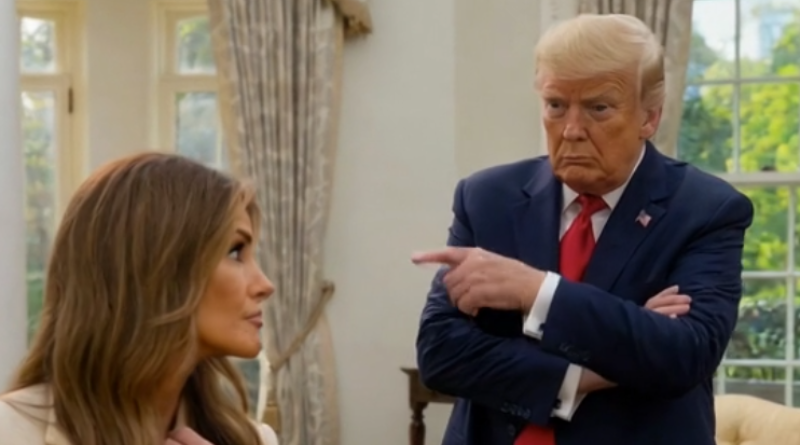
Observers have often speculated about the nature of their relationship, pointing to moments in public appearances that appear distant or reserved. During the visit, some interactions were interpreted by commentators as emotionally restrained, fueling ongoing discussion about whether their marriage functions more as a private partnership, a public institution, or a mixture of both. At the same time, Trump has frequently defended Melania in response to criticism from media figures, framing such attacks as inappropriate or unfair.
King Charles III, by contrast, was widely portrayed as embodying a traditional diplomatic role. His presence emphasized continuity, international cooperation, and the value of long-standing alliances. His messaging during the visit highlighted institutions such as NATO and reaffirmed support for collective security efforts, including assistance to Ukraine. These positions were often viewed as aligning with established globalist frameworks in contrast to Trump’s more nationalist and “America First” orientation.
This contrast contributed to broader debate about the direction of U.S. foreign policy. Supporters of Trump argue that prioritizing domestic interests strengthens national resilience and reduces unnecessary international commitments. Critics, however, suggest that a more isolationist approach risks diminishing American influence and creating space for rival global powers to expand their reach.
Beyond policy differences, the visit also became a lens through which broader narratives about leadership style were examined. For some commentators, it highlighted competing visions of governance: one rooted in multilateral cooperation and institutional diplomacy, and another focused on national sovereignty and unilateral decision-making.
Ultimately, the event was interpreted by analysts as a moment that reflected wider political and cultural divisions, both within the United States and in its relationships abroad.