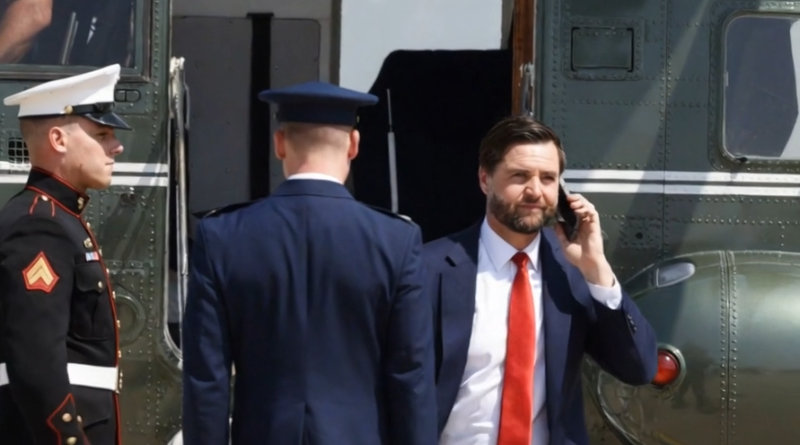
Vice President JD Vance’s planned trip to Islamabad was abruptly postponed on Tuesday amid growing uncertainty over whether Iran would participate in upcoming diplomatic negotiations. Instead of departing for Pakistan to lead the U.S. delegation, Vance was recalled to the White House for internal policy meetings, according to CNN’s Alayna Treene. Officials said the visit has been delayed, though it has not been formally canceled and could still be rescheduled depending on developments.
The trip was intended to support a new round of negotiations following an earlier diplomatic effort involving Vance, special envoy Steve Witkoff, and senior adviser Jared Kushner. That round of talks ended without agreement after Iranian officials reportedly declined to give the assurances Washington sought regarding Tehran’s commitment not to pursue nuclear weapons capabilities.
Following the breakdown in discussions, Vance described the outcome as a setback, arguing that the lack of progress would ultimately have more serious consequences for Iran than for the United States.
At the same time, tensions across the region remain elevated. U.S. Central Command confirmed that 28 vessels were instructed to turn back or return to port due to ongoing restrictions linked to Iran. Officials declined to confirm whether any ships had entered Iranian ports but indicated that maritime movement through the Gulf of Oman remains tightly controlled.
With a two-week ceasefire involving the United States, Israel, and Iran approaching its expiration, uncertainty continues to surround whether Iranian representatives will attend the planned Islamabad talks. Pakistani officials stated that no formal response has yet been received from Tehran, although diplomatic communication through mediators is still ongoing.
Iranian President Masoud Pezeshkian has publicly criticized the initiative, casting doubt on the likelihood of participation. Meanwhile, U.S. and Pakistani officials have continued discussions aimed at reducing tensions and keeping diplomatic channels open.
President Donald Trump, however, signaled reluctance to extend the temporary ceasefire, emphasizing limited time and urging Iran to reach a deal quickly. As the deadline nears, the fate of the Islamabad negotiations—and broader efforts toward a lasting agreement—remains uncertain.