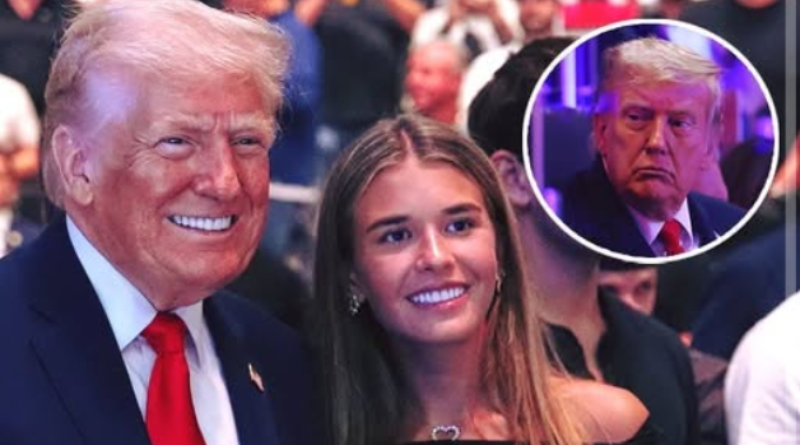
Kai Trump, the granddaughter of former President Donald Trump, found herself at the center of an online controversy following Game 3 of the NBA Finals at Madison Square Garden. The discussion began after a video she shared on social media showed her attending the game alongside her grandfather, who appeared on the arena’s large video screens during the event
As Donald Trump was displayed to the crowd, many spectators reacted with a mixture of cheers and boos. Videos recorded by fans and media outlets captured the moment, and reports noted that the negative reactions were clearly audible inside the arena. The incident quickly attracted attention online, with social media users debating the crowd’s response and its political significance.
The controversy intensified after Kai Trump posted a clip of the event that appeared to contain crowd noise different from what many viewers believed had occurred in the arena. Critics accused her of altering the audio to make it sound as though the crowd had responded more positively. The allegations spread rapidly across social media platforms, leading some users to claim that the original reaction had been intentionally changed.
However, the company responsible for producing the video later addressed the situation publicly. According to the firm, the audio heard in the clip was automatically modified by its video-processing system and was not edited by Kai Trump herself. The company explained that the adjustment was part of a standard process used to comply with licensing and broadcast requirements. Representatives stated that the version posted online was generated by the service and that Kai Trump had no involvement in changing the soundtrack.
The clarification eased some of the criticism, though debate continued online. Despite the controversy, Kai Trump appeared to focus on the experience of attending the championship game, later describing the atmosphere at Madison Square Garden as exciting and memorable. The incident highlights how quickly social media speculation can spread and how online narratives often develop before all the facts are known.