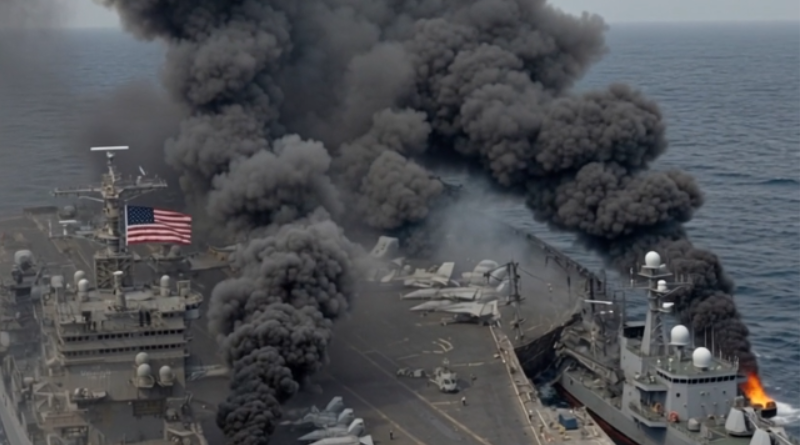
A routine morning at sea is shattered in this fictional naval warfare scenario when the USS Gerald R. Ford comes under a coordinated missile attack. Iran launches eight nearly identical missiles toward the carrier strike group, creating a complex and dangerous challenge for the fleet’s defenses. Hidden among seven highly sophisticated decoys is a single Khorramshahr missile carrying a powerful 1,500-kilogram high-explosive warhead, making it difficult to determine which target poses the greatest threat.
The carrier’s advanced Aegis Combat System immediately springs into action, tracking every incoming object and launching interceptor missiles in an attempt to destroy the threats before they reach the strike group. As the engagement unfolds, interceptors are expended at a rapid pace while defensive crews race against the clock. With only two incoming contacts remaining, uncertainty grows as commanders face the possibility that one of them is the genuine missile capable of inflicting catastrophic damage.
Amid the mounting pressure, Lieutenant Rachel Webb notices an almost imperceptible difference in the exhaust plume of one of the remaining missiles. Just 51 seconds into the engagement, she identifies a subtle variation that could distinguish the real threat from the decoys. While senior officers remain focused on the broader tactical picture, Webb trusts her training, experience, and instincts, recognizing that a single observation could determine the outcome of the battle.
The fictional scenario illustrates the growing complexity of modern missile warfare, where advanced decoys are specifically designed to overwhelm and confuse sophisticated defensive systems. Commanders must make life-or-death decisions in seconds while managing limited interceptor inventories and incomplete information. Even the world’s most advanced naval defenses can be tested by rapidly evolving missile technology and coordinated attacks intended to exploit every possible weakness.
Beyond its action-packed premise, the story emphasizes the enduring importance of human judgment alongside cutting-edge military technology. Automated defense systems can process enormous amounts of data at remarkable speed, but skilled operators remain indispensable for recognizing subtle clues and making critical decisions that algorithms alone might overlook. The scenario highlights the powerful partnership between advanced technology and disciplined personnel operating under extreme pressure.
Although entirely fictional, the narrative raises important questions about the future of naval warfare. As offensive missile systems become faster, smarter, and more deceptive, naval forces must continuously adapt through improved defensive technologies, refined tactics, and rigorous training. Ultimately, the story suggests that success in future conflicts will depend not only on technological superiority but also on the expertise, composure, and rapid decision-making of the sailors entrusted with defending their ships.