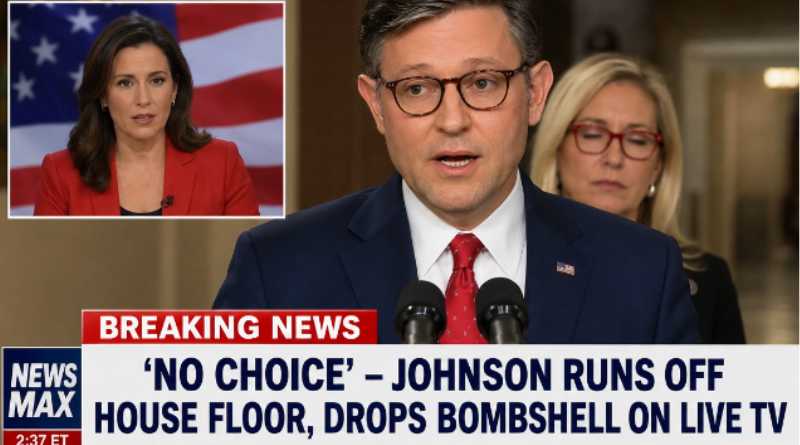
WASHINGTON — House Speaker Mike Johnson is using a creative parliamentary tactic to force Senate action on election security legislation by attaching it to a must-pass defense bill.
Johnson announced the plan this week, aiming to merge the SAVE America Act with the National Defense Authorization Act, or NDAA. The House originally passed the SAVE America Act in February. It requires proof of U.S. citizenship for federal voter registration and mandates photo ID when casting ballots.
Speaking to reporters, Johnson described the maneuver — known as “MIRVing,” or merging the measures onto a single rule for floor consideration.
“When Republicans vote for the rule, they’ll be voting not just for the NDAA… but they’ll be voting to merge onto that the SAVE America Act we passed back in February,” Johnson said.
The strategy comes after hard-line conservatives in the House paused routine business, demanding stronger action on election integrity. Johnson argues the combined package will demonstrate Republican resolve on the issue and pressure the Senate.
However, the plan faces significant hurdles. Even if it reaches the Senate, senators could remove the election provisions. It also risks delaying the NDAA, Congress’s annual must-pass legislation that authorizes military programs and defense spending.
Some Republicans say the approach doesn’t go far enough. Rep. Anna Paulina Luna criticized the procedural attachment on X, noting it would still let the Senate strip out the election language. She called for folding the provisions directly into the NDAA text through amendments.
“‘MIRVing’ the NDAA plus either SAVE America or Voter I.D. would still allow the Senate to strip out either or,” Luna wrote. She added that the measure enjoys support from roughly 80% of Americans.
Other GOP members are taking a wait-and-see approach. Rep. Tim Burchett said lawmakers need to review the details on paper. House Freedom Caucus Chairman Andy Harris voiced support for any effort to move the legislation forward.
Democrats strongly oppose the SAVE America Act, calling it an unnecessary barrier to voting. They are expected to push back against any NDAA that includes the election measure.
Republicans counter that the bill is critical to protecting election integrity by ensuring only U.S. citizens vote in federal elections. The House version does not add new restrictions on mail-in voting.
Johnson’s move highlights continued internal Republican debates over using must-pass bills to advance policy priorities. Negotiations are ongoing, and the fate of both the defense authorization and election reforms remains uncertain as the process moves forward.