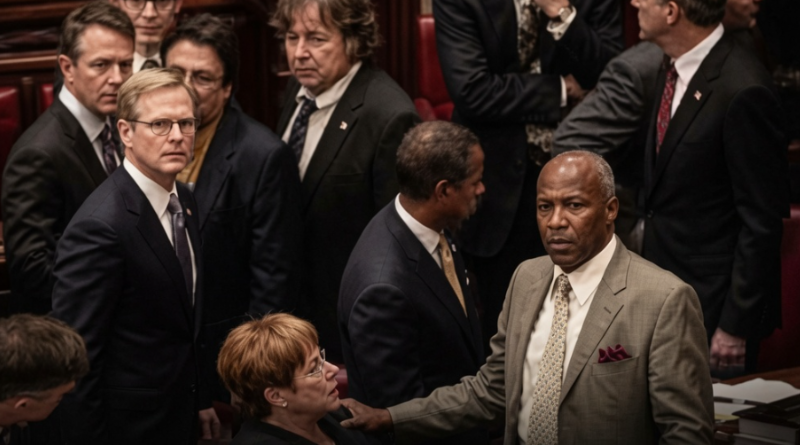
Clay passed away on Thursday after serving 32 years in the U.S. House of Representatives. A trailblazing civil rights leader and longtime champion for St. Louis, he helped guide the city’s recovery from “white flight” following the Civil Rights era. Through tough negotiations with construction trades and corporate leaders, Clay played a key role in transforming his hometown into the modern skyline that now frames the iconic Gateway Arch.
He entered politics early, winning election to the St. Louis Board of Aldermen in 1959 at just 28 years old. Clay became a visible figure during sit-ins protesting segregation in local businesses like White Castle and Howard Johnson, which enforced separate seating and rooms for Black and white customers.
“St. Louis was no different from any of the cities in the South,” Clay said in a 1998 profile. “We had rigid segregation — not by law, but by custom.”
His influence extended far beyond Missouri. Prominent Democrats sought his endorsements, which often proved decisive, and he was known for expecting strong loyalty in return. Clay co-founded the Congressional Black Caucus in 1971 and leaves behind a record of fighting for the poor, underrepresented, and disenfranchised. Supporters credit him with helping pass the Family and Medical Leave Act and raising the minimum wage.
Tributes poured in Friday from across St. Louis and Washington.
His son, former Congressman Lacy Clay (D-MO), said: “The Black community, almost overwhelmingly, looked at him as a fighter for them.”
St. Louis Mayor Cara Spencer stated: “Clay’s courageous legacy of public service to St. Louis and the country is etched in his historic legislative battles… Millions have him to thank for the Family and Medical Leave Act and raising the minimum wage. Generations of Black congressional leaders have followed in his footsteps as members of the Congressional Black Caucus, which he co-founded in 1971.”
Congressman [name] added: “I counted Mr. Clay as a grand mentor, as a trailblazer, and as a dear friend… I carry his example with me every time I walk onto the House Floor.”
The Congressional Black Caucus, now with a record 62 members in the 119th Congress, said in a statement: “Congressman Bill Clay leaves behind a legacy of dignity, courage, and transformative impact. His work laid the foundation for future generations of Black leadership in public service. May he rest in power and everlasting.”
Michael P. McMillan, president and CEO of the Urban League of Metropolitan St. Louis, called Clay “a giant in the Congress and a civil rights pioneer who helped transform St. Louis and change the lives of countless people locally and nationally.”