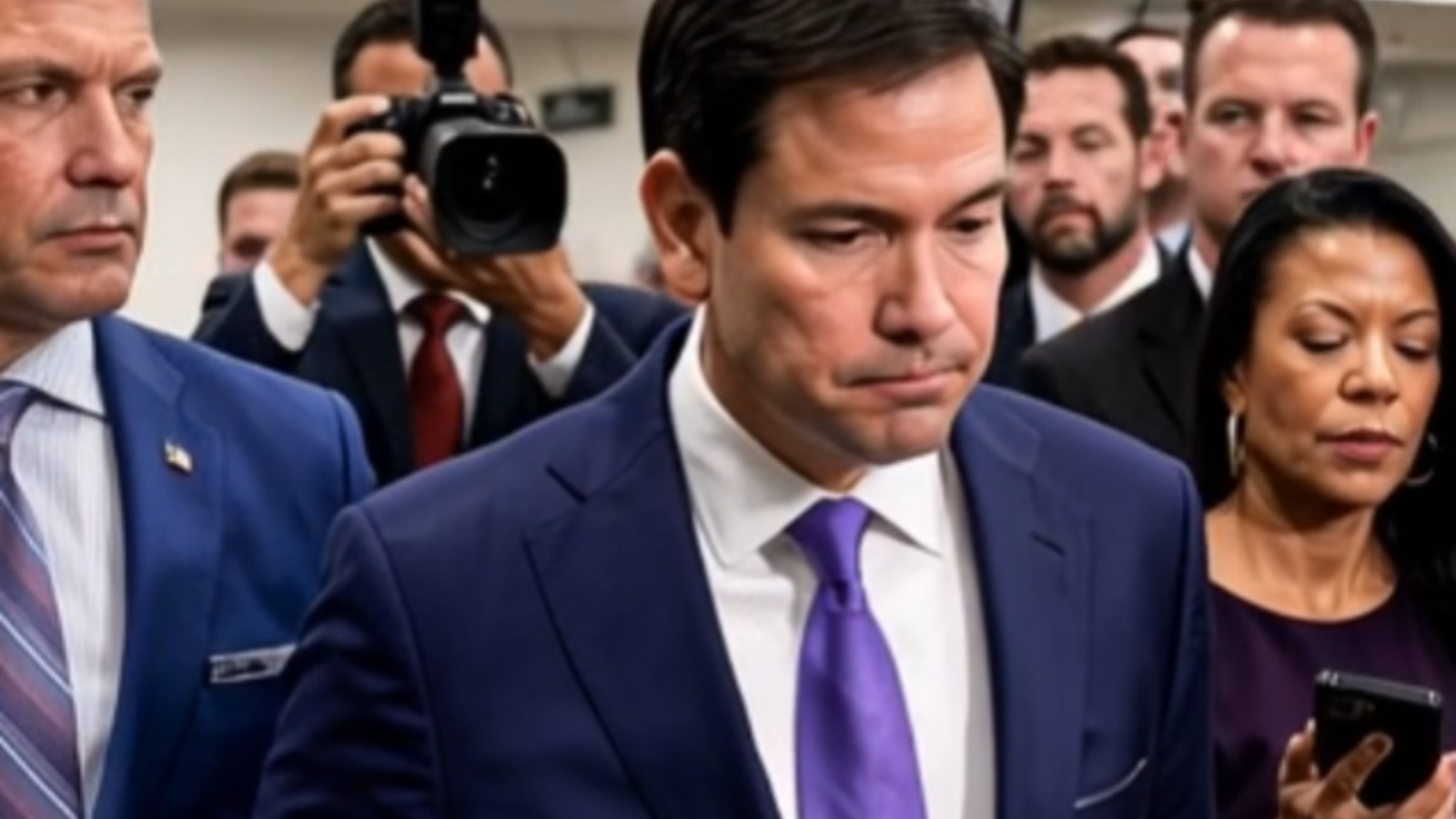
Rubio Reports Limited Progress in Efforts to De-escalate U.S.-Israel-Iran Conflict
Secretary of State Marco Rubio said back-channel diplomatic efforts aimed at reducing tensions in the U.S.-Israel-Iran conflict have shown limited progress, while warning that significant obstacles remain.
Rubio described the latest developments as cautiously encouraging but emphasized that it was too early to draw firm conclusions. “I don’t want to exaggerate it, but there’s been a little bit of movement, and that’s good,” he said, adding that he was “not popping champagne yet.”
His remarks reflected Washington’s cautious approach to the negotiations. Although the reported progress may create an opening for further discussions, Rubio warned that the opportunity for diplomacy could narrow if the parties fail to make meaningful progress.
Pakistan is reportedly playing a mediating role by helping maintain communication between Washington and Tehran. Security sources cited in reports indicate that Pakistan’s army chief, Field Marshal Syed Asim Munir, was expected to travel to Tehran for discussions with Iranian officials. The reported diplomatic activity underscores Islamabad’s efforts to keep communication channels open amid heightened regional tensions.
One major point of disagreement reportedly concerns Iran’s proposed tolling system for vessels passing through the Strait of Hormuz. Rubio rejected the proposal, describing it as unacceptable and warning that such an arrangement could complicate diplomatic efforts.
The Strait of Hormuz is a critical international shipping corridor connecting the Persian Gulf with global markets. Roughly one-fifth of global petroleum liquids consumption has historically moved through the strait, making its security important to energy supplies, shipping costs and the broader global economy.
Any restrictions, additional charges or disruptions affecting commercial traffic through the waterway could have consequences for international trade and energy markets.
For now, Rubio’s comments indicate that diplomatic contacts may be continuing, but they do not establish that an agreement has been reached. Major disagreements remain, and the outcome of the negotiations is uncertain.
Further progress will depend on whether the parties can resolve their differences and sustain communication. Until official details confirm a concrete breakthrough, the reported movement should be viewed as a limited development rather than evidence that the conflict is nearing a resolution.