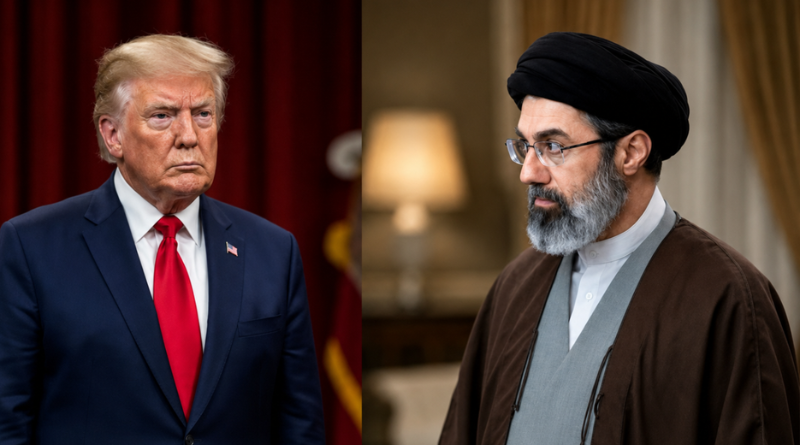
Following recent remarks by Donald Trump, Iranian officials have issued a strong warning that appears to mark a further escalation in already heightened regional tensions. Tehran has stated that its power plants and broader energy infrastructure now constitute a clear red line, declaring that any attack on these facilities would be met with immediate retaliation.
According to Iranian officials, this position reflects a shift in strategic posture. In earlier phases of regional confrontation, Iran was often described as maintaining certain informal limits, particularly regarding strikes on critical civilian-linked infrastructure. However, current statements suggest those constraints may no longer apply if Iran’s energy grid or essential industrial systems are targeted. Analysts interpret this as both a deterrence signal and an effort to redefine the rules of engagement in a volatile security environment.
The warning also underscores the potential for rapid escalation. Even limited or isolated incidents involving infrastructure could be interpreted as major provocations, increasing the risk of broader military confrontation. Iranian messaging emphasizes that energy systems are not solely military assets but essential components of civilian life, supporting hospitals, water distribution, communications, and emergency response networks. Disruption to these systems, officials argue, would inevitably produce widespread humanitarian consequences.
Beyond the immediate region, the implications could extend globally. The Middle East plays a central role in international energy production and transportation routes, meaning any significant damage to infrastructure could disrupt supply chains, increase global fuel prices, and contribute to broader economic instability. In this context, Iran is framing potential attacks not only as military actions but also as events with worldwide economic and humanitarian repercussions.
As rhetoric intensifies among multiple actors, diplomatic pathways become increasingly complex. Observers caution that miscalculation or misinterpretation of intent could accelerate escalation, making the situation more unpredictable. The evolving exchange of warnings highlights a fragile balance between deterrence, regional security, and global economic stability.