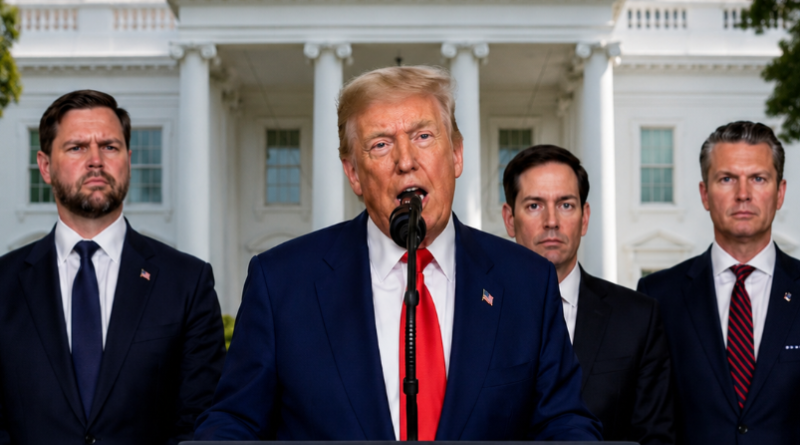
U.S. officials, including President Donald Trump, Vice President JD Vance, and Secretary of State Marco Rubio, are reportedly engaged in advanced discussions aimed at shaping a potential agreement intended to de-escalate tensions and possibly bring an end to the conflict involving Iran. Negotiations are said to be ongoing, with several key issues still being refined.
Secretary Rubio, speaking during an official visit to India, stressed that the Strait of Hormuz must be reopened, describing its current status as unacceptable and damaging to global stability. He emphasized that the United States considers unrestricted passage through the strategic waterway essential, stating that it “has to be open” and would be restored “one way or the other.”
Rubio also confirmed that diplomatic conversations are taking place in Qatar, where negotiators are working through specific wording in a draft framework. He indicated that progress is being made but cautioned that reaching final agreement will require additional time, possibly several days, due to the complexity of the terms under discussion. He characterized the process as continuous back-and-forth negotiations over key provisions.
According to U.S. military officials, American Central Command recently conducted what were described as self-defense operations in southern Iran. These strikes reportedly targeted missile launch sites and maritime assets believed to be involved in mining operations. The military stated that the actions were taken to safeguard U.S. personnel amid ongoing regional tensions and a fragile cease-fire environment.
Officials further noted that American naval forces operating in the region, including aircraft carriers and escort ships, have faced potential threats. Some of the reported military activity occurred near Bandar Abbas, a major Iranian port and naval hub.
Iranian representatives acknowledged that discussions with the United States have made progress on several issues but emphasized that a final agreement is still not close. They also accused Washington of changing its positions during negotiations.
Despite continued tensions, both sides remain engaged in diplomatic efforts. U.S. officials suggested that Iran may be showing greater willingness to consider a deal, particularly regarding limits on uranium enrichment and enforcement mechanisms designed to ensure long-term compliance.