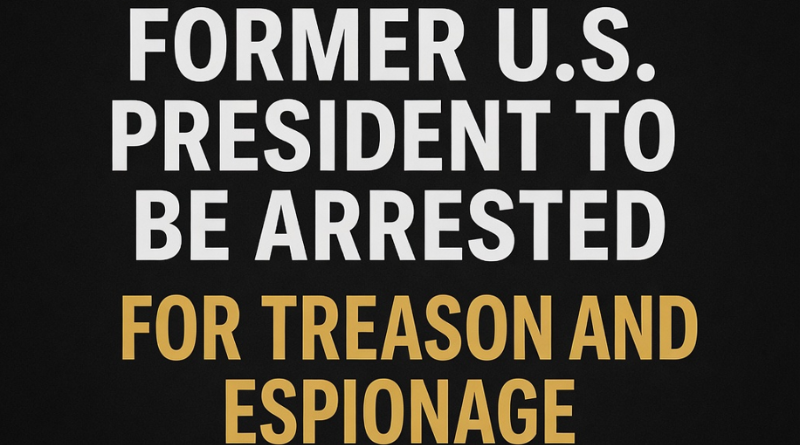
Reports circulating online have claimed that the U.S. Department of Justice is allegedly preparing an unprecedented indictment involving former President Barack Obama on charges such as treason, espionage, and seditious conspiracy. These claims describe a highly dramatic scenario in which federal investigators are said to be coordinating with law enforcement agencies and reviewing classified material, with some narratives suggesting that an indictment could be imminent.
According to these unverified accounts, the legal accusations being discussed would represent some of the most severe offenses under U.S. law. Treason, defined narrowly in the Constitution, requires acts such as levying war against the United States or providing aid and comfort to its enemies. Espionage involves the unauthorized handling or transmission of national defense information, while seditious conspiracy refers to an alleged coordinated effort to oppose or undermine government authority. Because of the gravity of these charges, any real-world case of this nature would demand an exceptionally high evidentiary standard and extensive judicial oversight.
The circulating narrative also suggests that logistical arrangements involving federal law enforcement and the U.S. Secret Service would be required due to the unique status of a former president who retains lifetime protection. However, these assertions remain speculative and are not supported by official statements or credible reporting from established news organizations.
As of now, there is no public record, court filing, or confirmation from the Department of Justice indicating that such an investigation or indictment exists. In high-profile federal cases, especially those involving former heads of state, procedural developments typically leave verifiable traces within the legal system long before any formal charges are announced.
Experts caution that the spread of sensational but unverified claims highlights the broader challenge of misinformation in the digital era, where politically charged narratives can circulate rapidly without supporting evidence. While such stories often generate intense public interest, they should be evaluated carefully against verified legal facts and official sources.