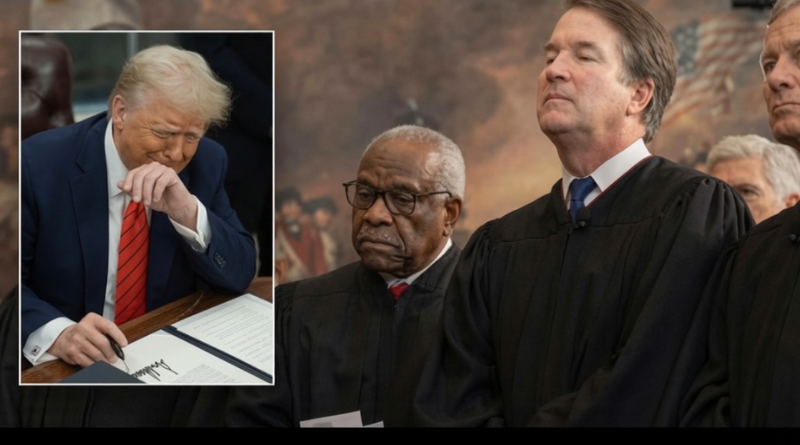
Justice Clarence Thomas is known for speaking infrequently during U.S. Supreme Court oral arguments, but when he believes a constitutional principle is being overlooked, he is often direct in expressing his concerns. That was the case when he sharply criticized the Court’s decision not to hear a lawsuit filed by Florida against California and Washington.
The dispute centered on Florida’s allegations that the two states issued commercial driver’s licenses to individuals who did not meet federal requirements, including standards related to English-language proficiency and immigration status. Florida argued that these licensing practices posed a threat to public safety and contributed to dangerous conditions on American highways.
Thomas, joined by Justice Samuel Alito, argued that the Supreme Court had a duty to consider the case because disputes between states fall within the Court’s original jurisdiction. In a written dissent, Thomas emphasized that when one state sues another, the Supreme Court is often the only judicial forum available to hear the matter.
“If this Court does not exercise jurisdiction over a controversy between two States, then the complaining State has no judicial forum in which to seek relief,” Thomas wrote.
Thomas also pointed to a fatal highway crash in Florida involving truck driver Harjinder Singh, citing the incident as an example of why the allegations deserved closer examination. He argued that federal law requires commercial driver’s license applicants to demonstrate sufficient English proficiency, pass required driving tests, and meet immigration-related standards before receiving a license.
According to Thomas, the Court’s refusal to hear the case leaves Florida without a legal avenue to pursue its claims against California and Washington. He maintained that interstate disputes occupy a unique constitutional position and should not be treated like ordinary appeals.
The decision sparked debate over the Supreme Court’s role in resolving conflicts between states. While Thomas and Alito viewed the refusal as a missed constitutional obligation, the majority of the Court chose not to take up the case, leaving the underlying allegations unresolved and the broader legal questions unanswered.