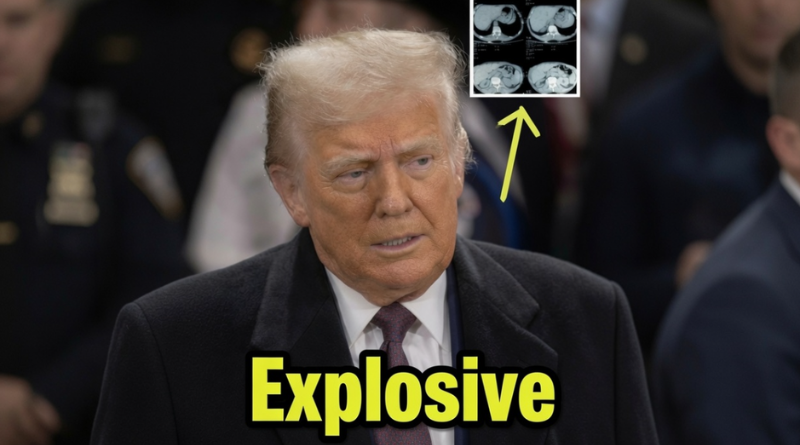
Former President Donald Trump addressed questions about a recent MRI scan while speaking to reporters aboard Air Force One, though key details about the procedure have not been publicly disclosed.
When asked why the imaging test was conducted during what was originally described as a routine physical examination, Trump responded in positive terms, describing the results as “outstanding” and “excellent.” He emphasized that the outcome reflected good health and did not indicate any problems. However, he did not provide any clarification regarding what part of the body was examined during the scan.
The absence of specific information has left uncertainty about the purpose of the MRI. It remains unclear whether the scan focused on the brain, cardiovascular system, spine, or another area of medical concern. This lack of detail has contributed to ongoing speculation among medical analysts and political observers, who have noted the unusual nature of limited disclosure surrounding such a common diagnostic tool.
The White House later described the procedure as part of an “expanded wellness evaluation,” suggesting that it went beyond a standard physical exam. Officials explained that the broader assessment was intended to monitor Trump’s health in preparation for a demanding schedule of public appearances, official duties, and travel commitments. However, no further specifics were provided regarding the findings or the clinical reasoning behind the MRI.
It was also confirmed by administration officials that this was the second physical examination Trump has undergone within the same year. Despite the frequency of evaluations, no detailed medical report, imaging data, or physician’s summary has been released to the public. This has left observers relying primarily on brief statements from the president and general descriptions from the White House.
The limited transparency has prompted discussion about expectations for medical disclosure from high-ranking public officials. Some commentators argue that greater clarity is important for public trust, particularly when it comes to the health of national leaders. Others note that medical privacy considerations often limit the amount of detail shared publicly, even in the case of presidents.
For now, Trump has encouraged the public to accept his assurances that the MRI results were normal and did not reveal any concerning issues. He has not indicated whether additional medical information will be released in the future, and officials have not suggested any timeline for further disclosure.
Until more comprehensive medical records or statements from attending physicians are made available, questions about the exact purpose, scope, and findings of the MRI remain unresolved.