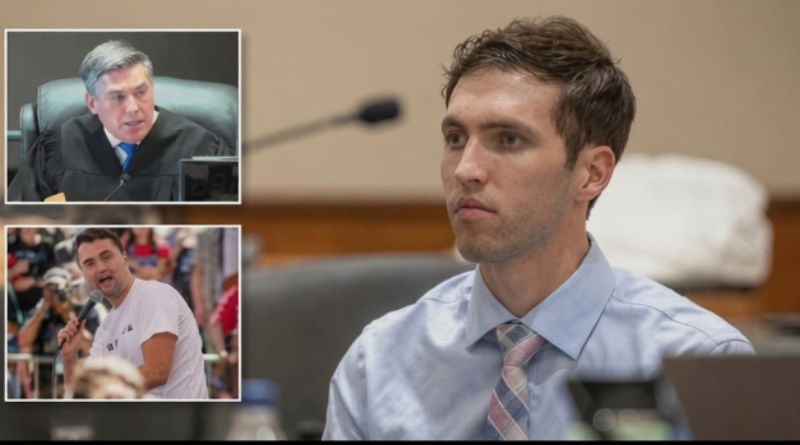
Preliminary hearings continued this week for Tyler Robinson, the man accused of fatally shooting TPUSA founder and conservative activist Charlie Kirk during a campus event at Utah Valley University nearly 10 months ago. As prosecutors presented evidence supporting the charges, several significant rulings and courtroom developments emerged.
Judge Tony Graf Jr. denied a request from the victim’s family to publicly display all exhibits during the hearing, including what prosecutors describe as a confession made by Lance Twiggs, Robinson’s romantic partner.
During Tuesday’s proceedings, Utah Department of Public Safety Sgt. Jennifer Faumina testified about DNA evidence collected after the September 10, 2025, shooting. Reading from forensic reports, she stated that investigators identified Twiggs’ DNA on two important pieces of evidence recovered at the scene: a screwdriver found on the rooftop of the Losee Center for Student Success and a towel wrapped around the rifle allegedly used in the attack. According to the analysis, both items contained DNA from two individuals, one of whom was identified as Twiggs.
The preliminary hearing moved forward after the Utah Supreme Court declined to hear the defense’s appeal of two pretrial rulings issued by Judge Graf. The defense had challenged the judge’s decisions allowing cameras in the courtroom and permitting certain hearsay evidence during the hearing. The state’s highest court denied the appeal and ruled that the request to delay the proceedings was no longer relevant.
The issue of media coverage has remained a point of contention throughout the case. Judge Graf previously ruled that requests for cameras would be considered individually for each hearing rather than issuing a blanket ban. News organizations are required to submit requests at least 14 days before proceedings, while either side may seek restrictions. Although the defense again attempted to block cameras during the preliminary hearing, Judge Graf rejected nearly all of its requests, granting only one motion involving a late-filed photography application from a media outlet.